AI Agent Marketing is not just another layer of AI marketing automation. An agent can interpret goals, choose steps, call tools, update records, send messages and sometimes trigger spend or sales handoffs without a marketer touching every action. That is powerful, but it also changes the risk profile. Before you automate, you need clear guardrails for what an agent can see, say and do.
The goal is not to slow your team down with bureaucracy. Good guardrails make automation easier to scale because everyone knows the boundaries. They reduce rework, protect customer data, preserve brand trust and give managers a clear way to decide which workflows are ready for agentic execution.
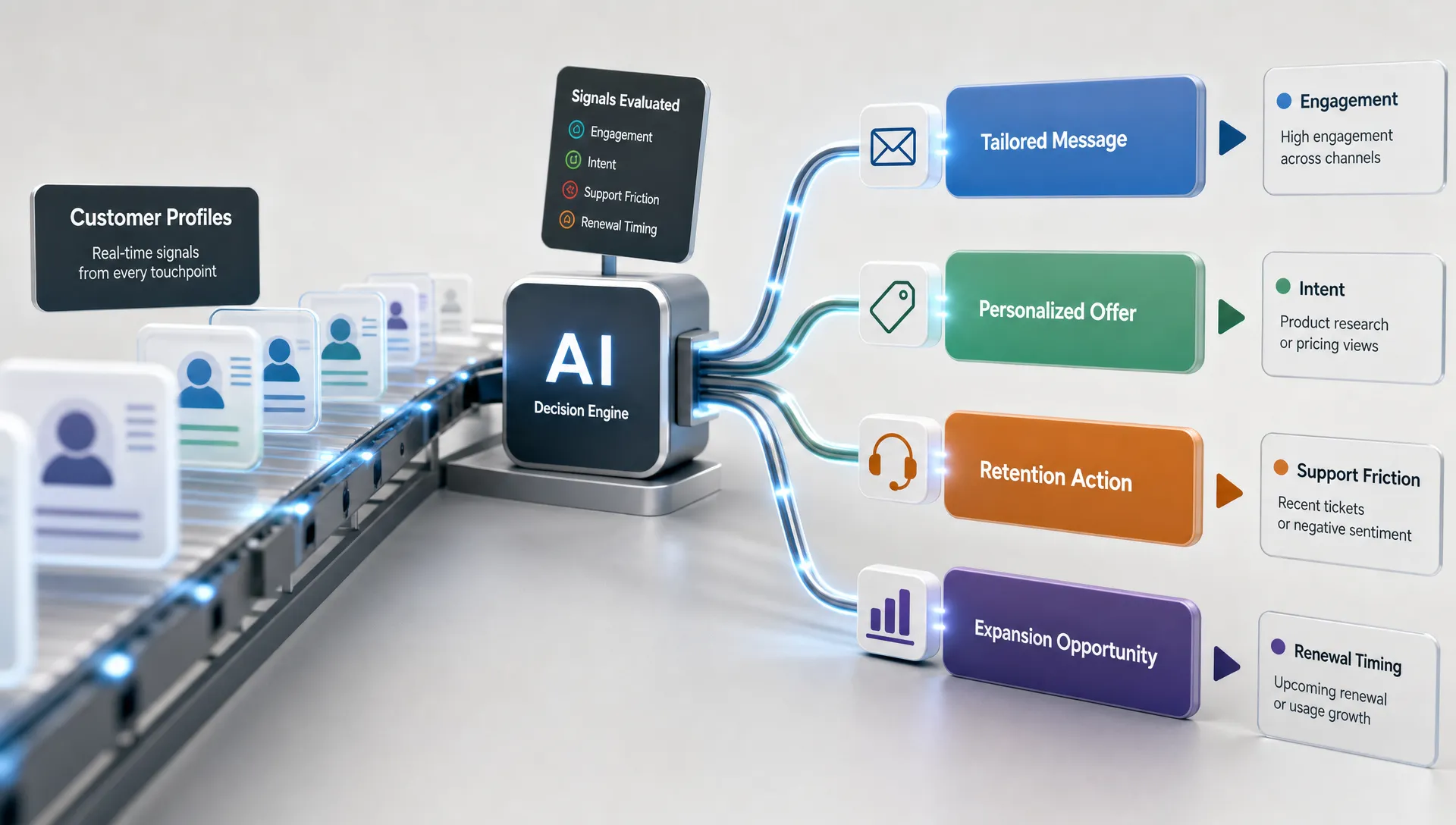
Traditional automation follows predefined rules: if a lead fills out a form, send an email. AI agents are different because they can make decisions inside a workflow. They may choose which segment to target, draft a reply, summarize customer intent, update a CRM field or recommend the next best action based on context.
That flexibility is why guardrails matter. A poorly constrained agent can create off-brand messaging, expose sensitive data, over-personalize in a way that feels invasive or take action based on a hallucinated assumption. A well-designed agent operates inside a known lane, with defined inputs, approved outputs and human review where the stakes are high.
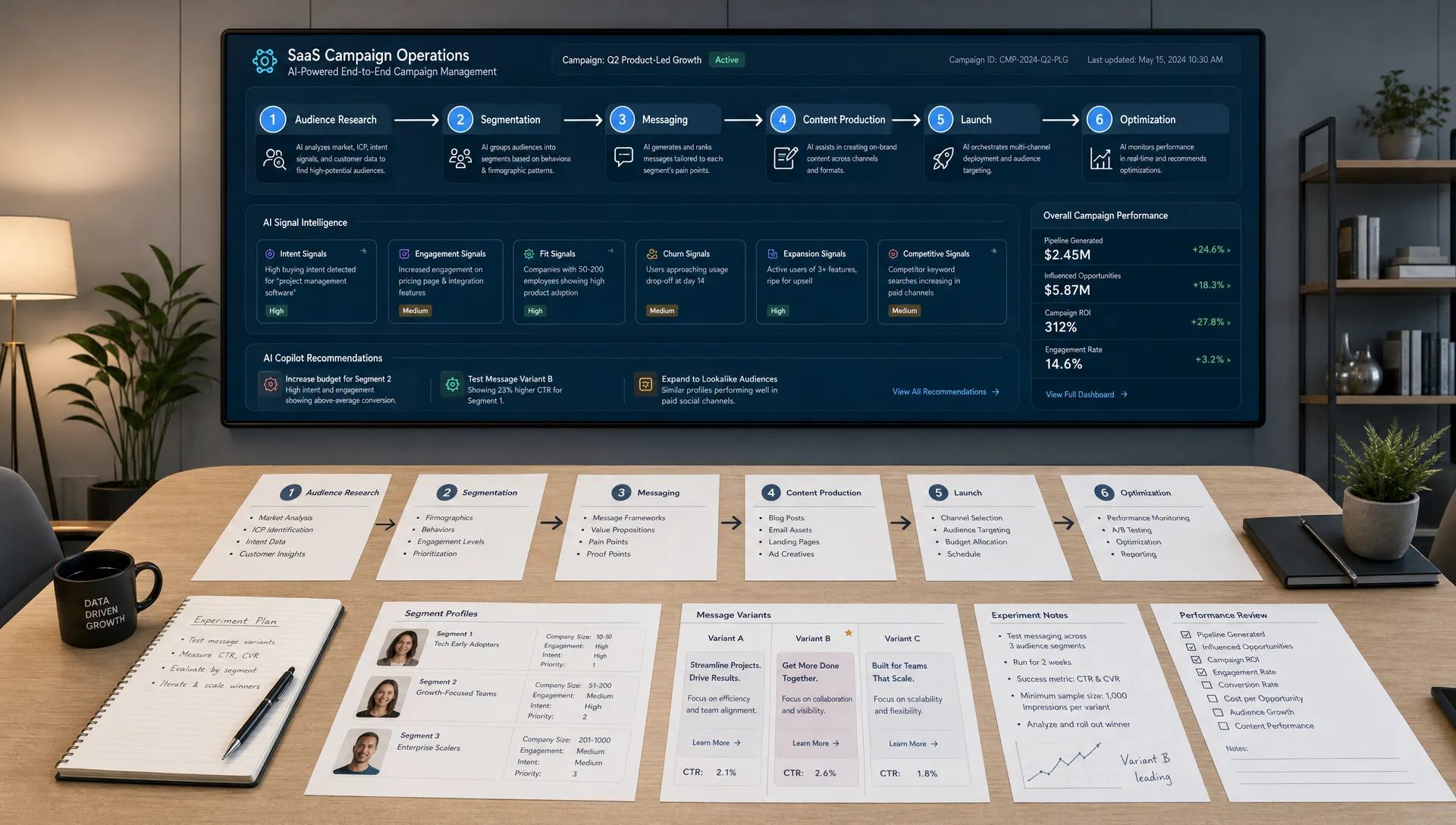
A basic workflow executes instructions. An agent interprets a goal, reasons through options and may use tools to complete a task. In marketing, that could mean researching an account, drafting outreach, enriching a lead record, checking campaign performance or preparing a content brief.
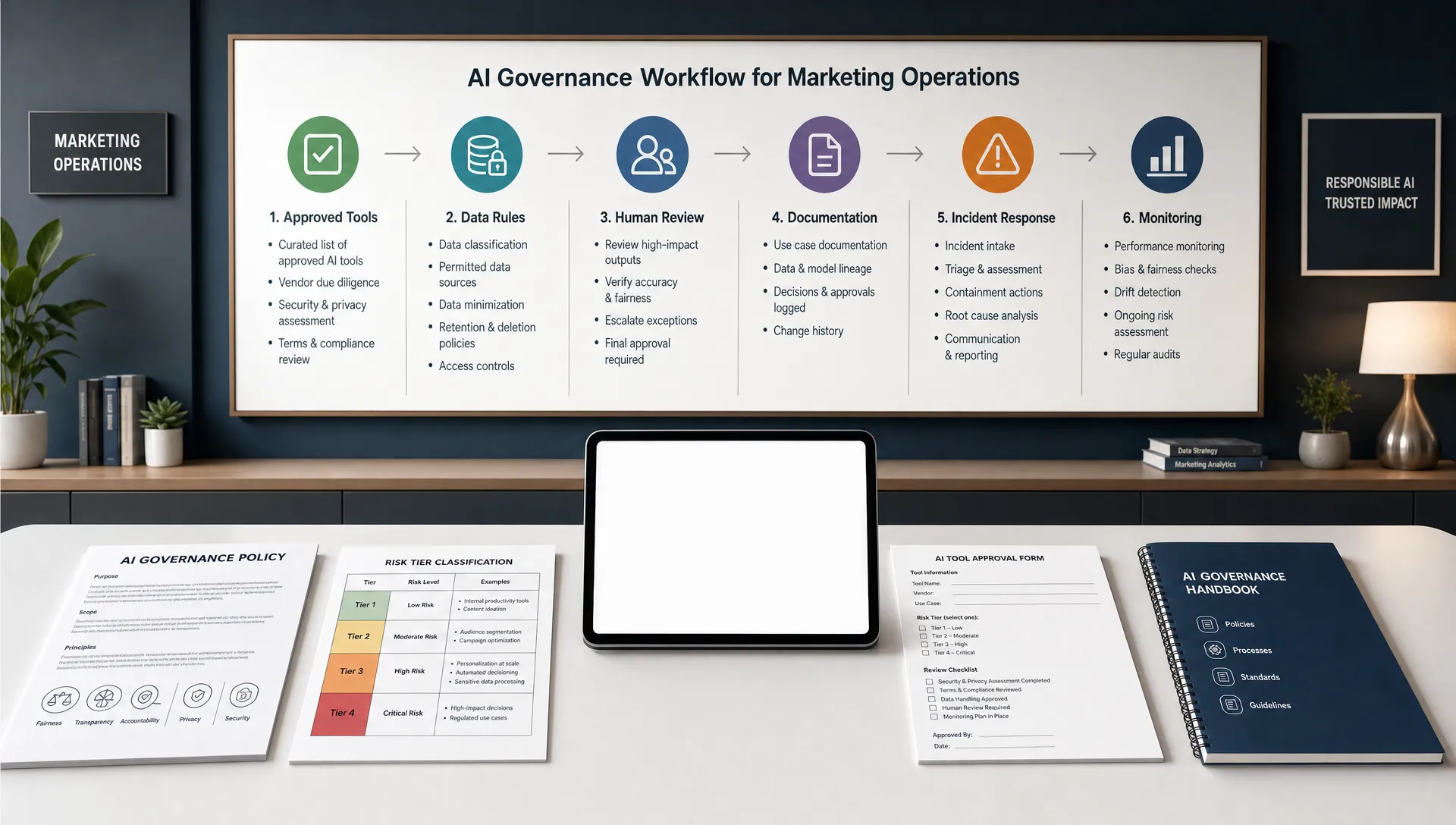
This is the core shift in AI Agent Marketing: you are not only approving content, you are approving a decision-making pattern. The agent needs instructions for when to act, when to ask for help and when to stop. Without those limits, even a useful workflow can become unpredictable once it is connected to your CRM, ad platform, email service provider or analytics stack.
A useful rule is to treat every agent like a junior team member with system access. You would not give a new hire unlimited publishing rights, financial authority and customer data access on day one. Agents deserve the same staged permissions.
The first guardrail is clarity. Before choosing a platform, define the exact job the agent will perform and the business outcome it supports. Vague goals such as “improve campaigns” or “automate content” are too broad. Better goals sound like “summarize sales call notes into CRM fields” or “draft three email variants for abandoned demo requests.”
For each agent, write a simple job card that includes the workflow owner, allowed inputs, approved tools, expected output and final decision maker. This becomes your reference point when evaluating vendors, configuring permissions and testing performance.
If your team is still deciding where AI fits into marketing operations, start with a workflow map and outcome definition before deploying agents. AIMarketer Hub’s guide on where to start with AI marketing automation gives a practical foundation for choosing use cases that are narrow enough to manage.
Not every marketing task needs the same level of control. An agent that summarizes internal campaign notes carries less risk than one that sends promotional emails to regulated customers. Risk tiers help your team move fast on low-risk tasks while protecting high-impact workflows.
A simple tiering model works well for most marketing teams:
| Risk tier | Example tasks | Main guardrail | Human review level |
|---|---|---|---|
| Low | Internal summaries, keyword clustering, meeting notes | Approved data sources | Spot checks |
| Medium | Drafting ads, email variations, landing page copy | Brand and claims review | Review before publishing |
| High | Customer segmentation, lead routing, outbound messages | Permission limits and audit logs | Required approval |
| Critical | Budget changes, legal claims, regulated offers | Executive and compliance signoff | Manual execution or dual approval |
AI Agent Marketing becomes easier to govern when every workflow is assigned a tier before launch. The tier tells the team which permissions are allowed, who approves outputs and what monitoring is required once the agent is live.
Data guardrails should answer three questions: what can the agent access, what can it retain and what can it share? In marketing, agents often touch personal data, audience segments, customer behavior, sales notes, campaign results and proprietary messaging. That makes access control a business issue, not only an IT issue.
Use least-privilege access as the default. If an agent only needs campaign performance by channel, it should not access full contact records. If it only drafts content, it should not have publishing rights. If it updates CRM fields, restrict it to the specific fields required for the workflow.
Security teams should also define rules for sensitive data types. These may include customer financial details, health information, legal matters, employment data, authentication credentials and confidential pricing. For regional, hosted or outsourced infrastructure needs, companies in La Reunion and Mayotte can work with MDSI’s managed IT, cloud and cybersecurity services to align agent workflows with secure infrastructure, identity controls and incident response planning.
Keep data rules visible inside the workflow documentation. If marketers cannot tell what an agent is allowed to use, they cannot judge whether its outputs are safe.

Approval gates should match the risk tier. A low-risk internal summary may only need periodic review. A customer-facing campaign should require approval before it enters a live channel. The mistake many teams make is applying the same approval process everywhere, which either slows harmless tasks or leaves sensitive tasks under-reviewed.
Design approval around decision points. For example, a content agent might be allowed to research, outline and draft without review, but it cannot publish. A lead routing agent might be allowed to recommend a score, but a human approves any rule changes that affect sales priority. A paid media agent might flag budget opportunities, but not change spend directly.
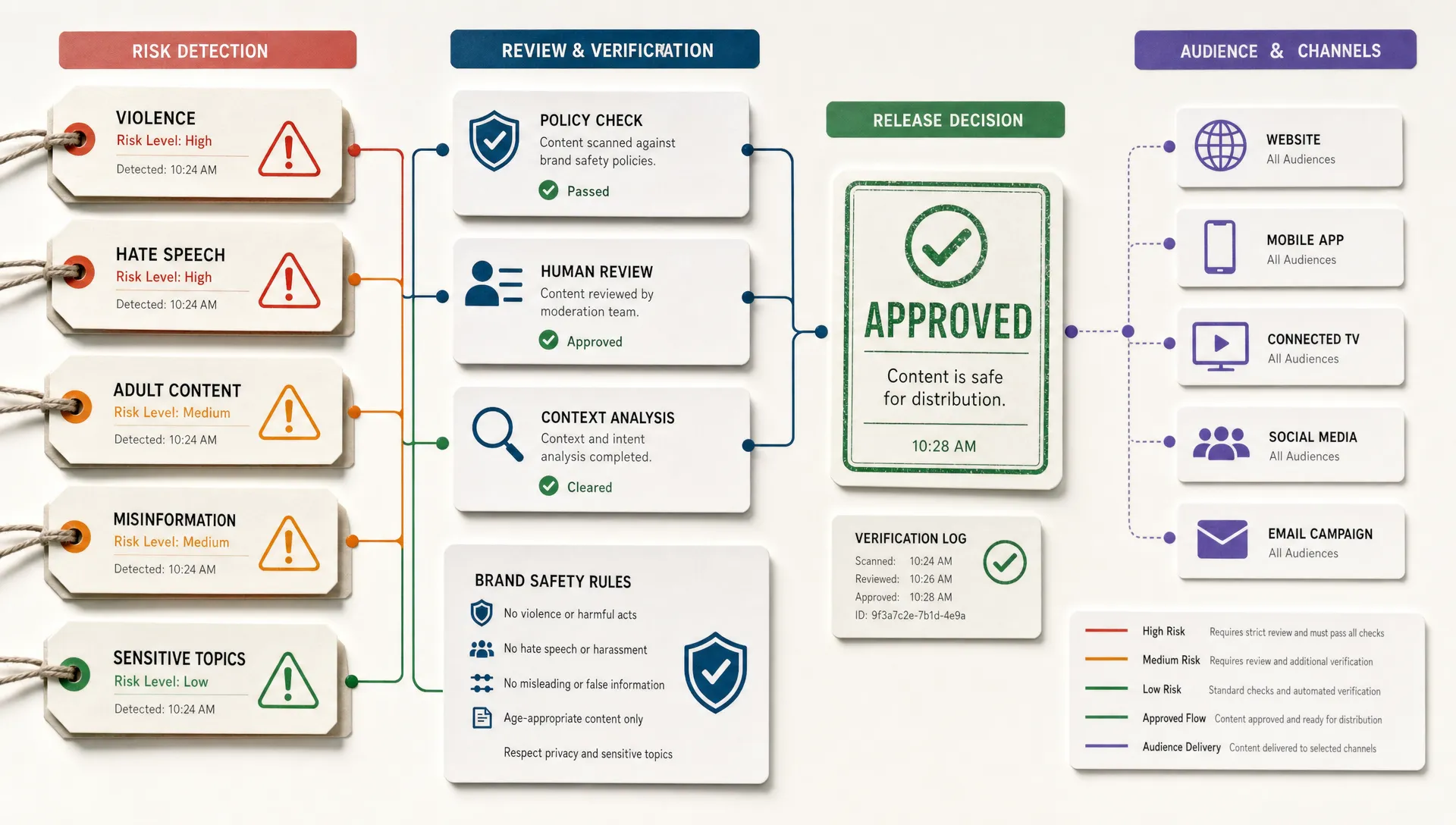
For customer-facing output, brand safety should be explicit. Define prohibited claims, restricted topics, required disclaimers, tone rules and escalation triggers. If you need a deeper template, AIMarketer Hub’s guide to creating an AI approval workflow for brand safety explains how to assign roles and review steps without turning every task into a bottleneck.
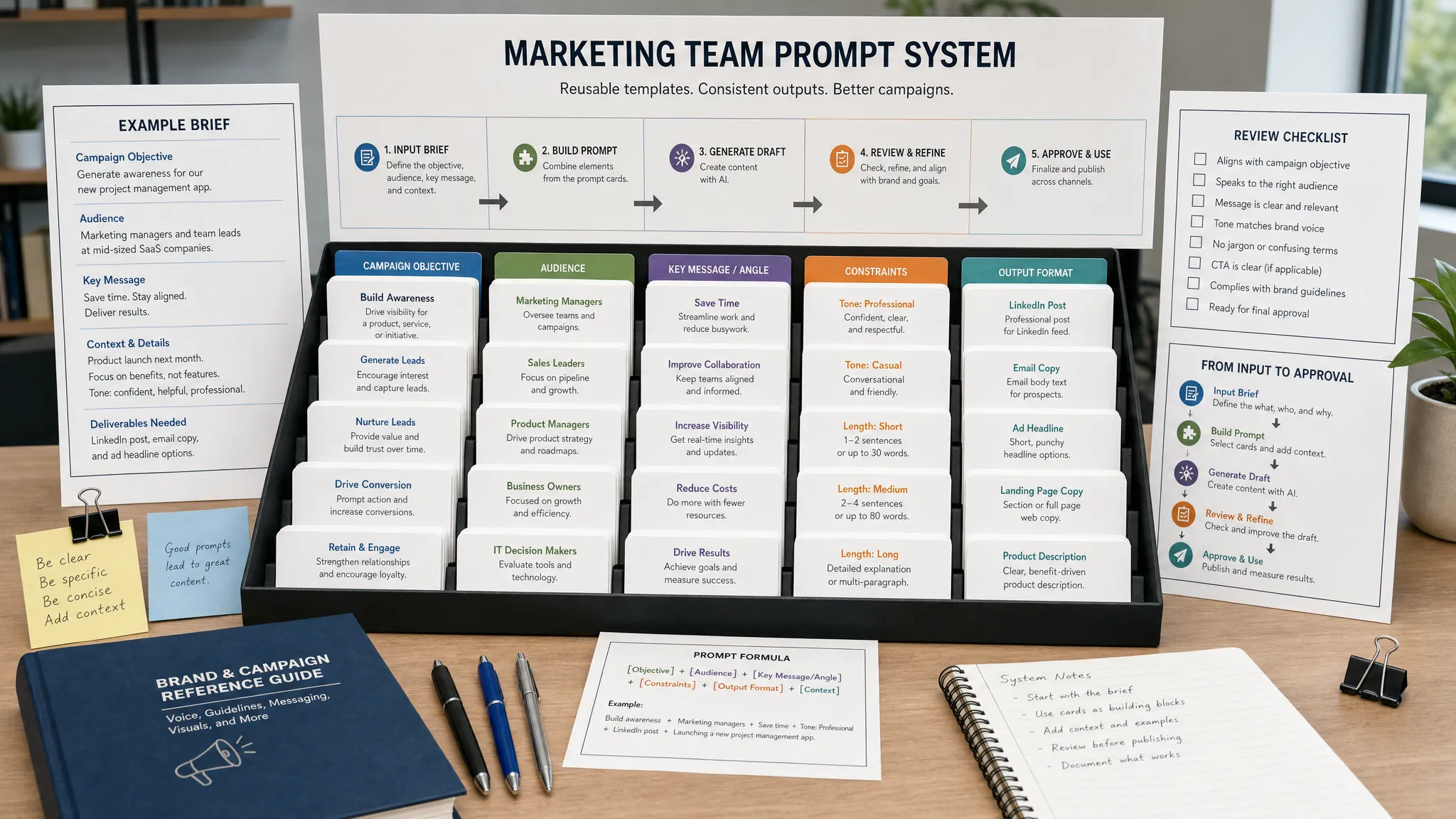
Prompts are operating instructions, not casual notes. A production agent should use approved prompt templates, approved knowledge sources and clear fallback behavior. If the agent does not know something, it should say so, ask for clarification or route the task to a human reviewer.
This is especially important for claims. Marketing agents may be asked to write about performance, pricing, product features, compliance, customer results or competitive comparisons. Those areas need source-backed rules. Do not allow an agent to invent statistics, promise outcomes or create customer quotes without verified support.
A practical claims guardrail has three parts: approved source library, banned claim categories and reviewer assignment. The source library may include product documentation, brand guidelines, legal-approved messaging, case studies and current pricing pages. Banned categories might include unverified ROI numbers, unsupported superiority claims or regulated advice. Reviewer assignment ensures the right person checks sensitive copy before it goes live.
This level of control gives AI Agent Marketing a better chance of improving output quality rather than creating a larger review burden.
An agent is not finished when it launches. Like a campaign, it needs performance monitoring, quality checks and a clear owner. Early monitoring should be more frequent because production behavior often reveals edge cases that did not appear in testing.
Track both marketing performance and operational safety. If you only measure output volume, the agent may look successful while creating low-quality leads, inaccurate messages or extra cleanup work for sales and support.
| Monitoring area | What to track | Warning sign |
|---|---|---|
| Output quality | Approval rate, revision rate, factual corrections | Reviewers repeatedly fix the same issue |
| Workflow accuracy | Correct routing, correct CRM updates, correct data use | Agent acts on incomplete or stale information |
| Brand safety | Tone alignment, claim compliance, escalation frequency | Off-brand or unsupported statements appear |
| Business impact | Conversion rate, response rate, cycle time, cost per action | More activity without better outcomes |
| Security and privacy | Access logs, unusual activity, sensitive data exposure | Agent accesses data outside its job scope |
Set a review rhythm before launch. During the first two weeks, daily checks may be appropriate for high-risk workflows. Once stable, weekly or monthly reviews can focus on exceptions, performance trends and prompt improvements.
Many agent failures come from tool access, not language output. If an agent can read from a CRM, write to a spreadsheet, trigger a webhook or create a task in a sales platform, integration testing becomes a guardrail.
Test with sandbox data first. Confirm that the agent can only access the intended records, use the intended actions and handle errors safely. Pay close attention to permission scopes, API limits, logging, rollback options and vendor data retention rules.
Before buying or connecting a tool, marketers should ask how it handles authentication, role-based access, audit logs, deletion requests and customer data. AIMarketer Hub’s guide on how to audit AI tool integrations before you buy covers these questions in more detail.
AI Agent Marketing should never depend on trust alone. A vendor demo may show a perfect workflow, but your live environment includes messy data, legacy fields, unusual customer records and team-specific exceptions.
Every production agent needs a way to stop. A kill switch can be technical, such as disabling an API key, or operational, such as pausing an automation rule inside your marketing platform. The key is that the owner knows how to use it quickly.
Escalation paths matter when an agent produces a harmful output, accesses the wrong data or triggers actions at the wrong time. Decide in advance who investigates, who communicates internally and who approves restarting the workflow. For customer-facing incidents, include support, legal, compliance and communications where appropriate.
A strong escalation plan includes incident categories, response owners, evidence capture, rollback steps and restart criteria. Restart criteria are often overlooked. Do not simply turn an agent back on because the issue appears fixed. Require a documented cause, corrected guardrail and successful test run.
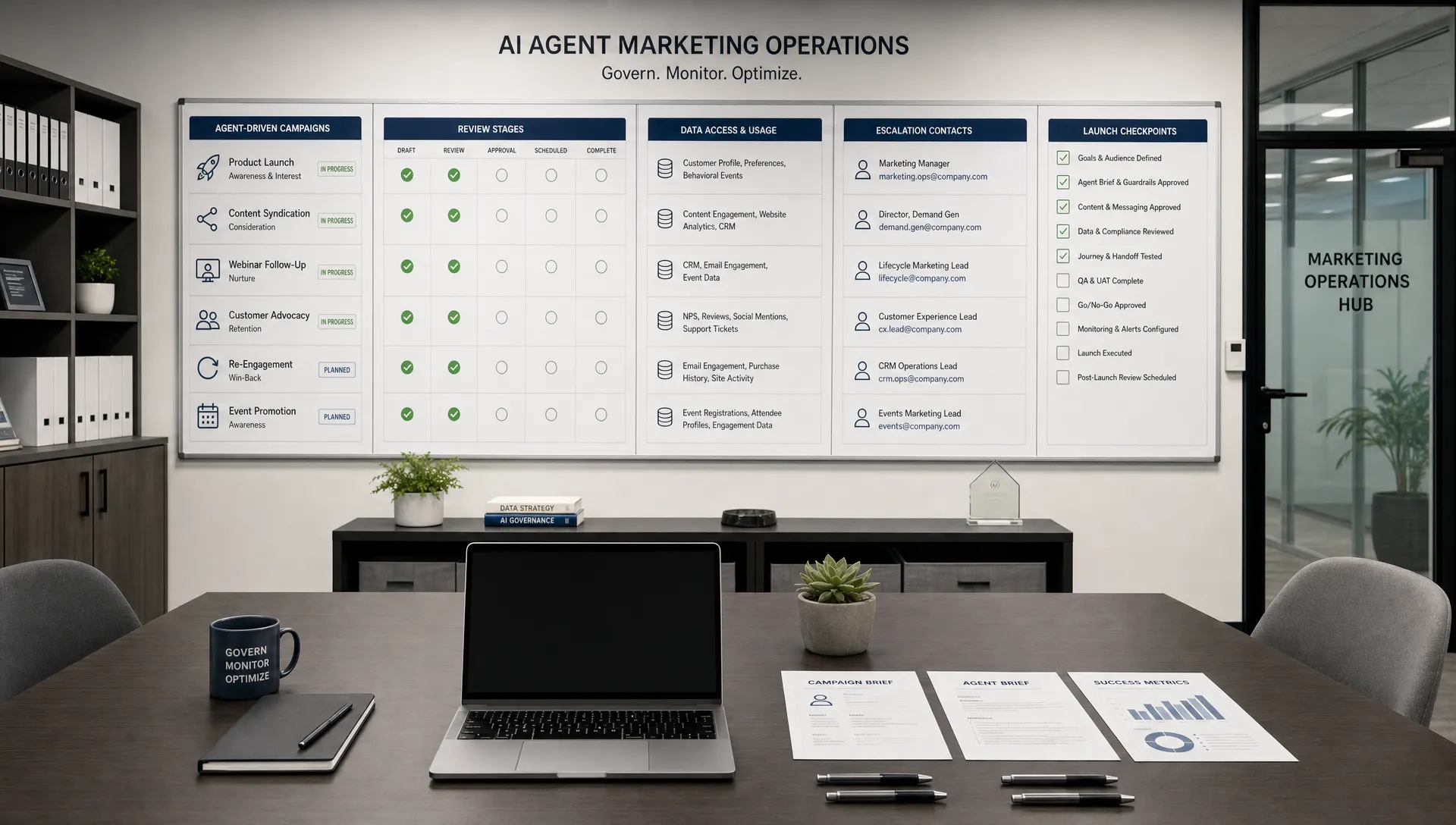
Before an agent goes live, run a short preflight review. This should be simple enough for marketing teams to use but strict enough to catch major gaps.
This checklist is not a substitute for a full governance policy, but it prevents the most common launch mistakes. For broader team standards, use it alongside a documented governance framework. AIMarketer Hub’s article on building an AI marketing governance policy is a useful next step if your team needs a formal structure.
The first mistake is automating too much at once. A multi-step agent that researches, writes, segments, publishes and reports may sound efficient, but it is hard to debug. Start with one action or one decision, then expand after performance is stable.
The second mistake is treating human review as a vague safety net. “Someone will check it” is not a process. Name the reviewer, define what they check and set a clear approval threshold.
The third mistake is ignoring negative feedback loops. If an agent updates lead scores based on flawed data, future campaigns may optimize toward the wrong audience. If it drafts content from outdated product information, future prompts may reinforce the same inaccuracies. Guardrails should include data freshness checks and periodic source reviews.
The fourth mistake is measuring speed but not trust. Faster content, faster routing or faster analysis only helps if the outputs are reliable. In AI Agent Marketing, trust is an operating metric. If teams lose confidence in the agent, adoption will stall no matter how impressive the automation looks.
Guardrails work best when they become part of everyday marketing operations. AIMarketer Hub brings together AI-powered marketing tools, expert guides, calculators, prompt resources, SEO tools and performance analytics that help teams automate with more structure.
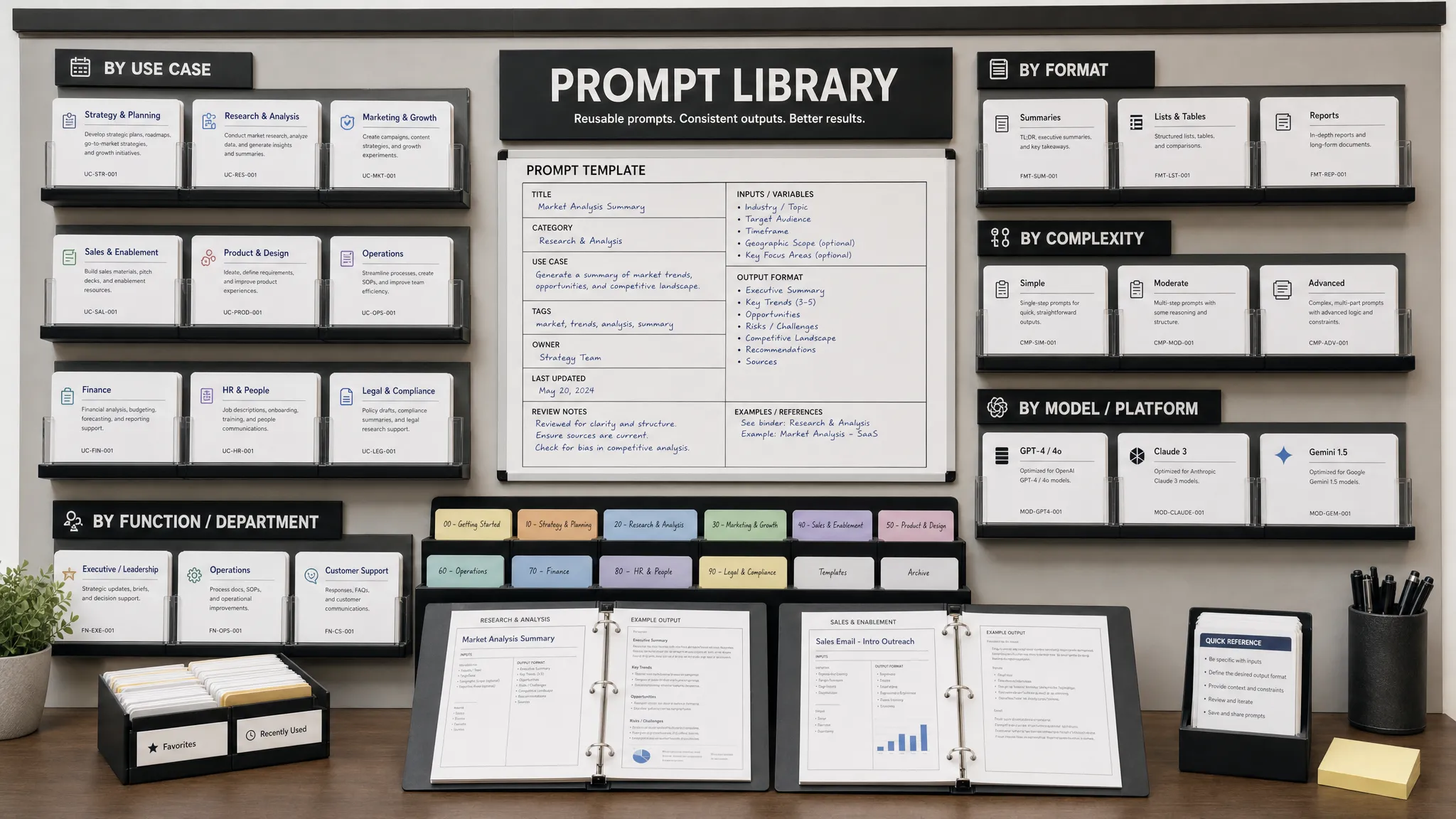
Use the platform to standardize prompts, document repeatable workflows, support content creation and connect automation decisions to measurable marketing outcomes. The safest teams do not ask agents to replace strategy. They use agents to execute defined tasks inside a system that marketers can inspect, improve and control.
What is AI Agent Marketing? AI Agent Marketing uses AI agents to perform marketing tasks that require context, tool use or decision-making. Examples include drafting campaign assets, updating CRM records, qualifying leads, summarizing analytics or recommending next steps inside a workflow.
Which marketing workflows are safest to automate first? Start with low-risk internal tasks such as research summaries, content briefs, keyword clustering, meeting notes and campaign reporting. These workflows create efficiency without giving the agent direct publishing, spending or customer-contact authority.
Do AI agents always need human approval? No. Approval should match risk. Low-risk internal outputs may only need spot checks, while customer-facing messages, regulated claims, budget changes and lead-routing logic usually need formal review before execution.
What is the most important guardrail before launch? The most important guardrail is a clear action boundary. Define what the agent can access, what it can change, what it can publish and when it must escalate to a human.
AI agents can help marketing teams move faster, but speed without boundaries creates avoidable risk. Start with a narrow job, assign a risk tier, limit data access, build review gates, test integrations and monitor live performance. Once those basics are in place, automation becomes easier to scale because the system is designed for accountability from the start.
Use AI Agent Marketing as an operating model, not a shortcut. The teams that benefit most will be the ones that automate repeatable work while keeping strategy, judgment and accountability clearly owned by people.